Fostering respect and resilience.
Bantaba Family Support Program
Next Session
2238 S Park St
Madison, 53713 United States

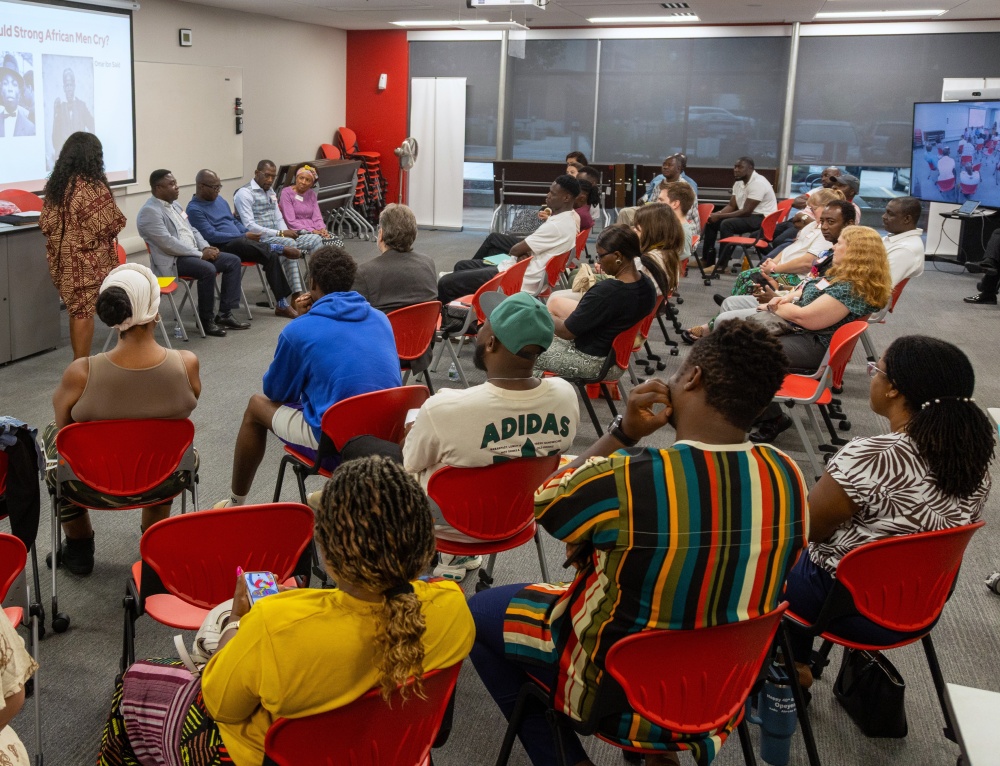
Here are the topics you can expect at Bantaba:
- Violence (Understanding & Prevention)
- Leadership & Relationship Building
- Healthy Masculinity
- Trauma-Informed Support & Healing
And here are the types of activities to expect:
- Guided discussions
- Interactive activities and simulations
- Both expert- and peer-led learning
Bantaba Family Support is open to African adults and teens looking to participate in open dialogue around family stability, safety, and well-being; share their life experiences and receive support; and increase their awareness of violence prevention strategies and crisis resources.
Presenter Bios
Ayomi Obuseh is a Nigerian-Ugandan community organizer and political educator based in Madison, Wisconsin. Her work focuses on building relationships across the state, particularly with Black communities and immigrant communities, to support them in exercising their political power.
As a member of the African diaspora, Ayomi is passionate about recognizing the growing presence of African communities in American civic life. She believes the African vote is a powerful and often under-recognized force in shaping local and national politics, and that engaging African immigrants and their families must be an intentional part of building stronger communities and a more representative democracy.
Ayomi’s freedom dream includes seeing Africans advocate for their communities and recognize themselves as participants in shaping the systems that govern their lives. She is committed to helping build systems that welcome and reflect the growing African diaspora, especially in her hometown of Madison.
Nura Said Ganshert is a Somali-born, Atlanta-raised civic advocate who previously managed regional operations for the Movement Disorders Society Africa Section, working with African doctors, researchers and allied health professionals to expand education, research and training opportunities across the continent.
Today Nura is a Regulatory Specialist with the Dept. of Surgery and UW Clinical Trials Institute at the School of Medicine and Public Health where she’s also pursuing a Master’s in Biotechnology. She serves on the UW Madison Immigration and International Issues Committee, advising on issues affecting students, faculty, scholars, and staff.
Nura’s civic engagement grew from experiencing rising housing costs and its impact on her family and community. What began as attending a city committee meeting to voice her concerns grew into a deeper commitment to understanding and shaping local policy.
Since then, Nura has published a preliminary audit of Fitchburg rental trends with seven actionable recommendations related to resident stability, participates in local and regional housing conversations, and is actively engaged in the Fitchburg 2050 Comprehensive Plan Update, advocating for the needs and priorities of African communities.
Nura believes lived experience is valuable expertise and that meaningful change is built when we come together to shape decisions that affect our lives.
Maia Pearson is a lifelong South Madison resident, working mother of three teenagers, educator, community organizer, and public servant whose work is rooted in a simple belief that the people most affected by our systems should have a meaningful voice in shaping them and where opportunity is not determined by a person’s ZIP code, income, race, or circumstances.
Maia has spent her career working across education, government, philanthropy, and grassroots organizing. She is a current University of Wisconsin-Madison graduate student and teaching assistant at the School of Human Ecology, focused on global cultural development. Currently Maia serves as Executive Director of the Mann Educational Opportunity Fund, an endowed scholarship program focused on helping high school students of color overcome financial and personal barriers to academic and personal success.
Maia also serves on the Madison Metropolitan School District Board of Education, where she was first elected in 2021 and has served in board leadership as Vice President and currently as board treasurer. In addition, Maia is an inaugural member and Chair of Madison’s Police Civilian Oversight Board (PCOB), an independent civilian body established to work with the Office of the Independent Police Monitor and the community on police accountability, use of force, discipline, policies, training, community relations, and complaint processes. Throughout her career, Maia has organized alongside diverse communities to advocate for voting rights and fair electoral maps, educational access from K–12 through higher education, stronger community investment, and meaningful collaboration between residents and public institutions.
Maia’s work is ultimately about people: creating pathways for young people to thrive, strengthening the institutions entrusted to serve communities, and making sure the voices of everyday people remain central to the decisions that shape their lives.
Goodwill Obieze, who is the only elected African Dane County Board Supervisor for District 16 (City of Sun Prairie, far east of Madison). He is a proud father, husband, and an Uber Driver for over 10 years, is a First-generation American immigrant who migrated from a small village in Nigeria, West Africa. He was raised by a single mom who worked a minimum wage job to make sure he and his siblings had a great life growing up. Goodwill is a graduate of Madison East High School and holds a Bachelor of Business Administration and a Master of Business Administration(MBA) from the University of Wisconsin Oshkosh and Parkside, respectively. Goodwill has volunteered with Sunshine Food Pantry, Boys & Girls Club of Dane County, Madison Black Chamber of Commerce, and Living Spring International Church. He and his family live in Sun Prairie, and a Human Resources Professional at a Healthcare organization. Finally, Goodwill believes that Childcare should not cost more than college tuition.
Why it Matters:
In 2025, the ACCD trained 27 volunteers in violence prevention and peer support through 10 facilitated in-person sessions that featured trainers from Domestic Abuse and Intervention Services (DAIS), RCC Sexual Violence Center, Chrysalis and Safe Communities. Check back soon for testimonials from our Bantaba participants!